

Dear Governor-elect Healey and Lieutenant Governor-elect Driscoll,
Congratulations on your historic election in November. We are encouraged by your campaign promise to put support for families at the center of your governorship. Your proposed universal “child tax credit” of $600 will make Massachusetts a leader in family tax benefits.
We are encouraged that your plan would consolidate the Household Dependent Tax Credit and Dependent Care Tax Credit into a single credit that includes no qualifying expense requirements, eliminates the two dependent cap, raises the eligible age for children from under 12 to under 13 years old, and indexes the credit to prevent further erosion by inflation. The merits of these specific policies for increasing family affordability and equity are described in detail in a recent Niskanen Center report. In this letter, we provide updated cost estimates as well as suggestions to further consolidate our existing maze of family tax benefits to reduce costs while ensuring that all families are kept whole or made better off.
The Niskanen Center updated the estimates from their earlier report and found that your $600 tax credit reforms would have a net cost of approximately $429 million. The Legislature’s similarly-structured $310 tax credit that was eventually dropped from last session’s tax package was far less robust and had an estimated $130 million net cost.
We would like to bring to your attention how the tax simplification in your plan could be extended to two additional family tax benefits as part of your broader tax reform proposal. Currently, Massachusetts has a separate $1,000 dependent exemption (estimated cost of $88 million) and a $1,000 exemption for dependent students aged 19 or over (estimated cost of $10.4 million). By exempting $1,000 in income that would otherwise be subject to a 5 percent income tax, these tax benefits are typically worth $50 per dependent for middle- and upper-income families but worth less or nothing to lower-income families who often have insufficient income to apply further exemptions. Replacing these exemptions with a fully refundable $50 credit for dependent children aged 13-18 and students aged 19 or over would have three important benefits.
- Extending the benefits of the converted exemptions to low-income families currently excluded from these benefits.
- Reducing the budget cost of the overall package by eliminating the exemption for dependents already eligible for the proposed $600 expansion and redirecting a portion of those savings to a fully refundable credit for older children. All families would still be better off relative to the existing system we have today.
- Reducing complexity and administrative burden on families trying to navigate a maze of tax benefits by further streamlining them.
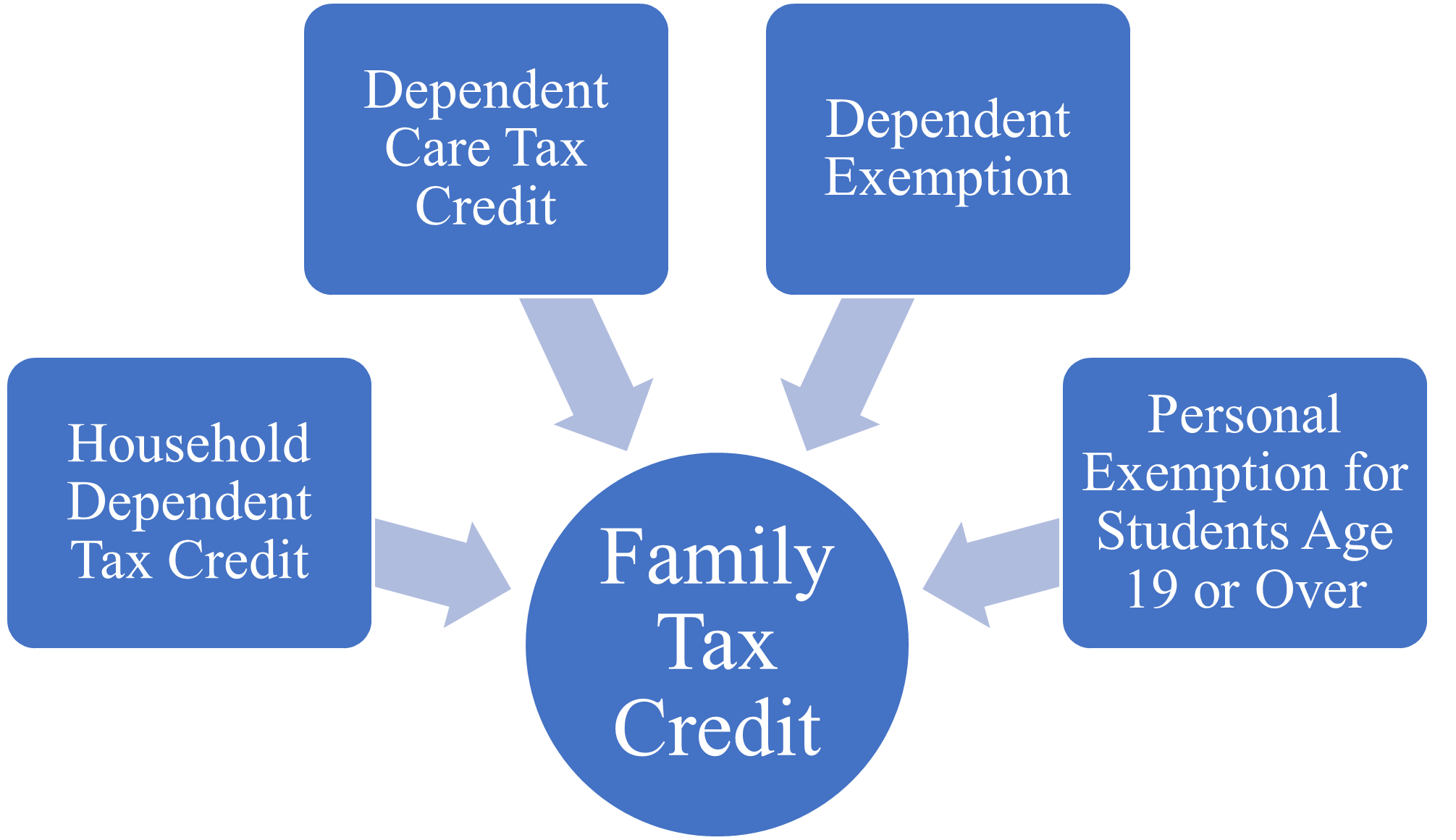
The result would consolidate four separate tax credits and exemptions, each with their own distinct rules, into one simpler, fully refundable Family Tax Credit worth:
- $600 for each dependent who is under 13 years old, disabled, or elderly.
- $50 for each dependent who is 13-18 years old or students 19 or over.
By further simplifying family tax supports into a more common-sense and equitable structure these reforms would constitute a major policy breakthrough that would help all families and target benefits to those with greater need.
We look forward to working with the Healey-Driscoll administration to make the Commonwealth a more affordable and equitable place for families. Please do not hesitate to reach out to us if you have any questions. Thank you.
Sincerely,
| Phineas Baxandall Policy Director Massachusetts Budget and Policy Center pbaxandall@massbudget.org |
Joshua McCabe Senior Family Economic Security Analyst Niskanen Center jmccabe@niskanencenter.org |